Kenya has a malnutrition crisis that the data makes impossible to ignore. Across the arid and semi-arid counties of northern and eastern Kenya, child wasting rates run at two to four times the national average, with no sign of structural improvement. Kenya’s therapeutic nutrition pipeline remains significantly dependent on imported supply alongside local production. And the supply chain delivering them is fragile: concentrated in distant European manufacturers, exposed to global logistics disruptions, and carrying cost structures that compress the number of children any given procurement budget can reach.
There is a better answer, and it is geographically closer, operationally more resilient, and cost-competitive without any compromise on quality. India – the world’s second-largest groundnut producer, with certified RUTF manufacturers already supplying East Africa is where Kenya’s procurement strategy should be looking.
In this blog, we’ll deep dive into the nuances of importing RUTF and RUSF from Indian manufacturers and streamlining the supply chain that has potential to save lives.
-
- Kenya’s Child Malnutrition Crisis
- Where Kenya’s RUTF Supply Chain Falls Short
- Why India Is the Strategic Answer for Kenyan Procurement
- How to Qualify an Indian RUTF Supplier for Kenya
- Frequently Asked Questions
- Conclusion
Kenya’s Child Malnutrition Crisis
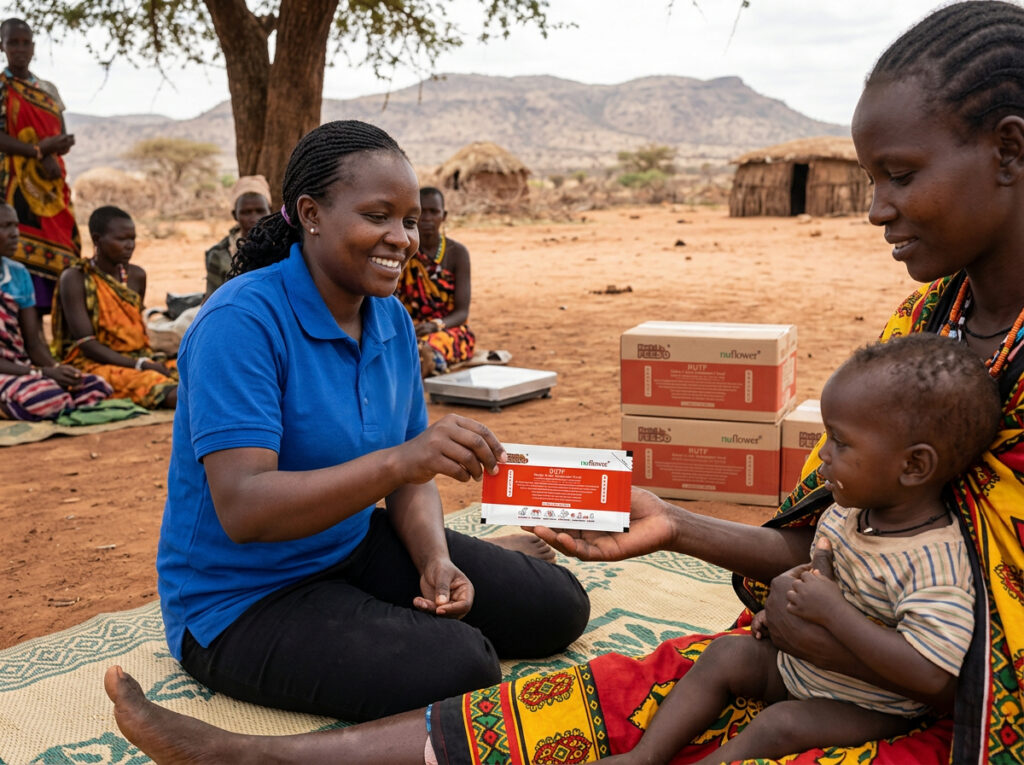
Nationally, over 760,000 children aged 6 to 59 months suffer from acute malnutrition, with 180,400 classified as severely acutely malnourished and requiring immediate RUTF treatment as per sources.
Several counties, including Turkana, Mandera, Samburu, Baringo (Tiaty), and Marsabit remain in Phase 4 of acute malnutrition severity, indicating persistent critical conditions requiring ongoing therapeutic nutrition supply.
A recent report suggested that one in three children screened in Turkana in July – August 2025 was found to be suffering from acute malnutrition, a rate that far exceeds the 15% Global Acute Malnutrition emergency threshold.
Where Kenya’s RUTF Supply Chain Falls Short
Distance and Transit Time
European RUTF manufacturers are 30+ days away from Mombasa by sea. In a context where children are screened and referred for treatment on an emergency basis, procurement lead times measured in weeks, not days, translate directly into treatment gaps. Procurement strategies built around single European suppliers carry inherent response-time risk that Kenyan programmes cannot absorb.
Logistics Vulnerability
Red Sea shipping disruptions throughout 2025 added 10 to 14 days to European-origin cargo transiting via the Suez Canal. Mombasa Port handled a record 45.45 million metric tonnes of cargo in 2025, a 10.9% increase, but the port’s growth was partly constrained by global shipping disruptions affecting EU-origin lanes.
Indian Ocean routes from Indian ports to Mombasa are not subject to Red Sea routing providing Kenyan buyers with a supply chain that is geographically insulated from the disruptions that affected European-origin RUTF in recent years.
Cost Structure
European RUTF is priced in euros and manufactured from peanut inputs that themselves carry import costs and USD commodity exposure. For Kenyan buyers operating in Kenya shillings and managing constrained programme budgets, every euro of unnecessary input cost or freight premium is a child who does not get treated. Lower landed cost from Indian suppliers is not a minor efficiency gain, it is a programme impact multiplier.
Supply Concentration Risk
Kenya’s therapeutic nutrition programmes have historically relied on a small number of European suppliers. Supply concentration is a procurement risk that emergency nutrition contexts make especially acute, a disruption at a single manufacturing facility, a shipping route closure, or a funding delay at a preferred supplier can leave county health programmes without stock precisely when demand is highest.
Why India Is the Strategic Answer for Kenyan Procurement
Raw Material Scale That Protects Supply
India is the world’s second-largest groundnut producer, accounting for approximately 17% of global output. Production spans six major states, providing geographic diversification against single-region crop failure.
For Kenyan buyers, this means peanut paste – RUTF’s primary ingredient, is sourced and priced in India without import dependency. That stability flows directly into your programme budget.
Quality Standards That Meet Import Requirements
Established Indian RUTF manufacturers hold FSSAI registration, EIC (Export Inspection Council) export approval, and FSSC 22000 food safety certification. Third-party batch-level aflatoxin testing, micronutrient verification, and full traceability documentation are standard deliverables from qualified exporters.
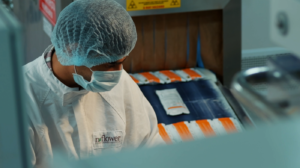
Nuflower Foods operates at 60 MT daily production capacity, has supplied therapeutic nutrition products across 42+ countries, and maintains a zero product recall record across its export history. These are the verifiable benchmarks Kenyan procurement teams should apply to any supplier they evaluate.
Proximity: The Mombasa Route From India
Kenya can connect directly to India’s primary export ports through service linking Indian subcontinent ports including Nhava Sheva and Mundra with Mombasa and Dar es Salaam, reducing transit time to approximately 14 to 18 days and eliminating the routing vulnerability that affects European-origin RUTF.
Resilience Proven Under Pressure
Indian food manufacturers were classified as essential businesses during COVID-19 lockdowns and continued operating when global supply chains faced their most severe disruption in decades. Indian Ocean shipping routes to Mombasa remained open and unaffected by the Red Sea crisis throughout 2025. Both data points matter for Kenyan procurement teams stress-testing supplier resilience.
How to Qualify an Indian RUTF Supplier for Kenya
Kenya’s import environment and distribution conditions require specific verification steps that go beyond a standard supplier qualification. When evaluating Indian RUTF exporters for Kenya programmes, procurement teams should confirm:
FSSAI Registration & EIC Export Approval: The foundational certification pair for Indian food exports. Request current certificates, a credible supplier provides these within 24 hours.
Tropical Stability Data: Ask specifically for accelerated stability test results at conditions representative of Kenya’s ASAL distribution environment, elevated temperature and humidity. Do not accept the standard shelf life claim alone.
Micronutrient Batch Consistency: Request batch-to-batch nutritional variance data for the last 12 months. Consistency at scale is what separates a serious manufacturer from one who performs well on a qualification sample.
Export Track Record to East Africa: Ask specifically for previous shipments to Kenya, Uganda, Ethiopia, or other East African markets. A supplier with an established East Africa track record has already navigated regional import documentation, port procedures, and last-mile logistics.
Surge Capacity & Lead Times: For emergency procurement contexts which Kenya’s ASAL counties face regularly, confirm maximum monthly output and minimum emergency order lead times in writing.
Ready to source RUTF and RUSF for Kenya from India’s most trusted manufacturer?
Indian RUTF Exporter to Kenya: Why Nuflower is a Reliable and Cost-Effective Supply Partner
As a trusted manufacturer of lipid-based nutrient supplements in India, Nuflower Foods and Nutrition has established itself as a cornerstone of the humanitarian supply chain in Kenya. With a proven track record of supplying over 4,700 MT of life-saving nutrition—comprising RUTF, RUSF, LNS-SQ, and LNS-MQ to the Kenyan market, Nuflower combines high-volume capacity with unmatched cost-efficiency.
By leveraging India’s strategic raw material advantages and a state-of-the-art 60 MT/day production facility, Nuflower offers a seamless, reliable pipeline for NGOs and health ministries. Our adherence to “Gold Standard” global quality certifications (including FSSC 22000 and UNICEF-aligned protocols) ensures that every sachet delivered to Kenya is both medically efficacious and economically viable for large-scale malnutrition programs.
Frequently Asked Questions
What is RUTF and how is it used in Kenya?
RUTF (Ready-to-Use Therapeutic Food) is a peanut paste-based product used to treat severe acute malnutrition in children under five. In Kenya, it is used in community-based treatment programmes across arid and semi-arid counties including Turkana, Wajir, Marsabit, and Mandera, where wasting rates significantly exceed the national average.
How long does it take to ship RUTF from India to Kenya?
Shipping from Indian west coast ports to Mombasa takes approximately 14 to 18 days on direct service routes. A new direct service between South Asian ports and Mombasa was launched in 2025, further reducing transit time and freight costs for Kenyan importers.
Does Indian RUTF meet Kenya’s food import safety standards?
Yes. Indian RUTF exporters hold FSSAI registration and EIC export approval, the framework governing Indian food exports to international markets including Kenya. Third-party batch certificates covering aflatoxin levels, microbiological safety, and nutritional composition are standard documentation provided to Kenyan importers on request.
Kenya has 760,000 children in acute malnutrition. The supply chain reaching those children is concentrated, fragile, and more expensive than it needs to be. European-origin RUTF travels 20 to 30 or more days to reach Mombasa, carries EUR-denominated cost structures that squeeze programme budgets, and is exposed to shipping disruptions that Kenyan programmes have no buffer against.
India is the second-largest groundnut producer in the world, with a direct shipping route to Mombasa that takes 14 to 18 days, an established base of certified RUTF manufacturers, and a supply chain that operated without interruption through COVID lockdowns and Red Sea disruptions alike. These are not marketing claims, they are verifiable facts that procurement teams can confirm in a supplier qualification dossier within 48 hours.
The procurement teams that diversify toward Indian sourcing now will carry lower landed costs, stronger supply resilience, and deeper supplier relationships into the years ahead. Kenya’s children cannot wait for that shift to happen slowly.
Ready to evaluate India’s most trusted RUTF supplier? Get in touch with us today.
ABOUT NUFLOWER: India’s leading RUTF and RUSF manufacturer with 15+ years of therapeutic nutrition export experience, 60 MT daily production capacity, and active supply programmes across 42+ countries.