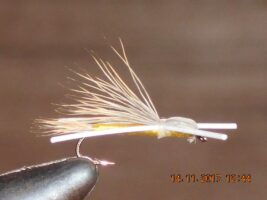
The CDC Shuttlecock is a popular dry-fly and emerger pattern designed to imitate insects emerging from the water. Its CDC feather construction creates a natural floating profile, making it particularly useful when trout feed on emerging insects near the surface.
For anglers fishing rivers, streams and stillwaters, this fly offers a practical way to target selective trout with a realistic insect presentation.
What Is a CDC Shuttlecock Fly?
A CDC Shuttlecock is an artificial fly pattern that imitates an emerging aquatic insect, particularly mayflies. Its distinctive design uses Cul de Canard (CDC) feathers positioned upright at the rear or upper section of the hook.
Unlike conventional dry flies with heavily dressed hackles, this pattern maintains a relatively simple body profile. The CDC fibres trap air and help support the fly on the water’s surface.
The upright feather arrangement also creates a visible silhouette that resembles an insect struggling to emerge.
Experienced fly anglers value this pattern because it presents a convincing imitation without creating unnecessary movement or disturbance on the water.
How Does CDC Material Help the Fly Float?
CDC stands for Cul de Canard, a French term referring to feathers from the preen gland area of a duck. These feathers contain fine fibres that naturally hold air.
This structure provides several practical advantages:
- Natural buoyancy: Fine CDC fibres trap air and help the fly remain on the surface.
- Soft movement: The delicate feather fibres respond to small water movements.
- Realistic appearance: CDC creates a subtle outline that resembles the wings of emerging insects.
- Lightweight construction: The material allows fly tiers to create delicate patterns without adding excessive bulk.
One important consideration is that CDC does not perform exactly like synthetic floating materials. Excessive handling, water saturation and fish slime can reduce its floating ability. Proper drying and careful maintenance help preserve its performance.
Why Do Trout Anglers Use a CDC Shuttlecock?
Trout frequently feed on insects that have reached the surface but have not completed their emergence. During these feeding periods, fish may ignore traditional dry flies because their shape and presentation do not match the natural food source.
The shuttlecock design addresses this situation by presenting a small, upright insect silhouette.
Its main fishing advantages include:
- It imitates vulnerable emerging insects.
- Its upright CDC wing improves visibility for anglers.
- Its lightweight construction creates a delicate landing.
- It works well when trout feed selectively near the surface.
- Its simple profile suits technical dry-fly fishing.
For example, when mayflies emerge in a slow-moving pool, trout may concentrate on insects trapped in the surface film. A CDC Shuttlecock can imitate this stage more convincingly than a fully emerged adult pattern.
When Should You Use This Emerger Fly Pattern?
Timing and insect activity play an important role in successful fly fishing.
The CDC Shuttlecock is particularly useful when trout show interest in insects emerging through the surface film.
Consider using it in these situations:
During mayfly hatches: When emerging mayflies become available, the pattern can imitate their vulnerable transition stage.
In slow-moving pools: Calm water allows trout to inspect artificial flies closely. A delicate presentation helps avoid unnecessary surface disturbance.
When fish refuse conventional dry flies: If trout rise repeatedly but reject your existing pattern, changing to an emerger imitation may improve your presentation.
During selective feeding: When fish target insects of a particular size and stage, matching the natural food becomes more important than using a larger, more visible fly.
Although the pattern can work in different freshwater environments, anglers should observe local insect activity before selecting their fly.
How Do You Fish a CDC Shuttlecock Effectively?
Presentation matters as much as fly design. Even a well-tied pattern may fail when it moves unnaturally across the surface.
Follow these practical steps:
- Observe the water: Look for rising trout, emerging insects and areas where fish feed regularly.
- Select the correct size: Match the fly to the approximate size of the natural insects.
- Use a suitable leader: A fine, appropriately matched leader helps deliver a delicate presentation.
- Approach carefully: Avoid casting shadows or creating unnecessary movement near feeding fish.
- Present the fly naturally: Cast upstream or across the current, allowing the pattern to drift with minimal drag.
- Watch the surface: Follow the fly carefully and respond when a trout takes it.
- Maintain the CDC: Dry the fly when necessary and restore its natural buoyancy before the next presentation.
A useful piece of practical advice is to avoid repeatedly applying conventional liquid floatant directly to CDC fibres. Some products can damage the feather’s natural floating characteristics. Always check that the treatment is suitable for CDC materials.
How Is a CDC Shuttlecock Different from Other Dry Flies?
Different dry-fly patterns imitate different insect stages and fishing conditions. Understanding these differences helps anglers select the right presentation.
A traditional parachute dry fly uses hackle arranged around a post to support the fly on the water. A standard mayfly imitation usually represents a fully emerged adult insect. By comparison, the CDC Shuttlecock focuses on an emerging insect or one sitting within the surface film.
Its distinguishing feature is the upright CDC wing, which creates a visible yet relatively delicate profile.
This makes it a useful addition to a fly box containing conventional dry flies, nymphs and other emerger imitations.
What Should You Look for When Buying a CDC Shuttlecock?
Fly quality affects presentation, durability and overall fishing performance. Before selecting a pattern, examine the following details:
- CDC feather quality: Look for fine, well-selected fibres with good natural structure.
- Hook quality: Choose a reliable hook with a suitable size and sharp point.
- Body proportions: The body should remain slim and balanced rather than unnecessarily bulky.
- Secure tying: Thread wraps should hold the materials firmly without damaging delicate CDC fibres.
- Consistent construction: Well-tied examples should maintain a similar profile and presentation.
A carefully constructed hand-tied CDC emerger fly offers better consistency than a poorly balanced pattern with loose or excessive materials.
Where Can You Find Quality CDC Shuttlecock Flies in Kenya?
Selecting suitable fishing flies requires attention to material quality, tying precision and practical performance. Kenya’s fly-tying tradition provides an important connection between skilled craftsmanship and the needs of freshwater anglers.
For anglers looking for CDC Shuttlecock fishing flies, construction quality should remain the priority. A well-proportioned pattern with carefully selected feathers and secure hook dressing provides a dependable starting point for different fishing conditions.
Trout Fly Fishing Flies Kenya specialises in handcrafted fishing flies, combining traditional fly-tying techniques with careful material selection and attention to detail. From its workshop in Limuru, Kiambu County, the company produces fishing flies for anglers in Kenya and international markets.
If you are considering adding this distinctive emerger pattern to your fly collection, choosing carefully tied CDC Shuttlecock flies can help you prepare for situations when trout feed close to the water’s surface.