Finding a gift that feels personal, useful, and emotionally meaningful is harder than it looks. I’ve bought gifts for newborns, toddlers, teens, and even adults, and one thing I’ve learned is that personalization changes everything. That’s why monogrammed stuffed animals continue to stand out as one of the most thoughtful gift options across all age groups. They’re not just toys. They’re comfort items, keepsakes, and memory holders that grow in value over time. In this guide, I’ll walk through why monogrammed stuffed animals work so well, what problems they solve, and how to choose the right one using the PAS framework.
The Problem: Why Most Gifts Fail to Feel Personal
The U.S. gift market is massive, but meaningful gifts are surprisingly rare. According to the National Retail Federation, Americans spend hundreds of billions of dollars annually on gifts, yet many recipients struggle to remember who gave them what. The problem isn’t cost. It’s emotional connection. Generic gifts often feel interchangeable, especially for children who receive multiple items at once.
I’ve personally watched kids open piles of presents, only to latch onto one item that felt like it belonged just to them. That item was often a monogrammed stuffed animal. Without personalization, even high-quality gifts can fade into the background. This lack of connection is the core problem gift buyers face today.
Agitating the Issue: When Generic Gifts Are Forgotten
When a gift doesn’t feel personal, it doesn’t get used. For babies and young children, this means missed opportunities for comfort and emotional development. The American Academy of Pediatrics notes that comfort objects play a key role in helping children self-soothe and manage transitions. A generic plush toy may look nice, but without a personal connection, it’s less likely to become that trusted object.
I’ve seen parents quietly donate unused toys weeks after birthdays and holidays. That’s frustrating for both the giver and the receiver. In contrast, monogrammed stuffed animals are rarely discarded. They’re saved, repaired, and often kept for years. When gifts fail to create attachment, they fail their purpose.
The Solution Overview: Why Monogrammed Stuffed Animals Work
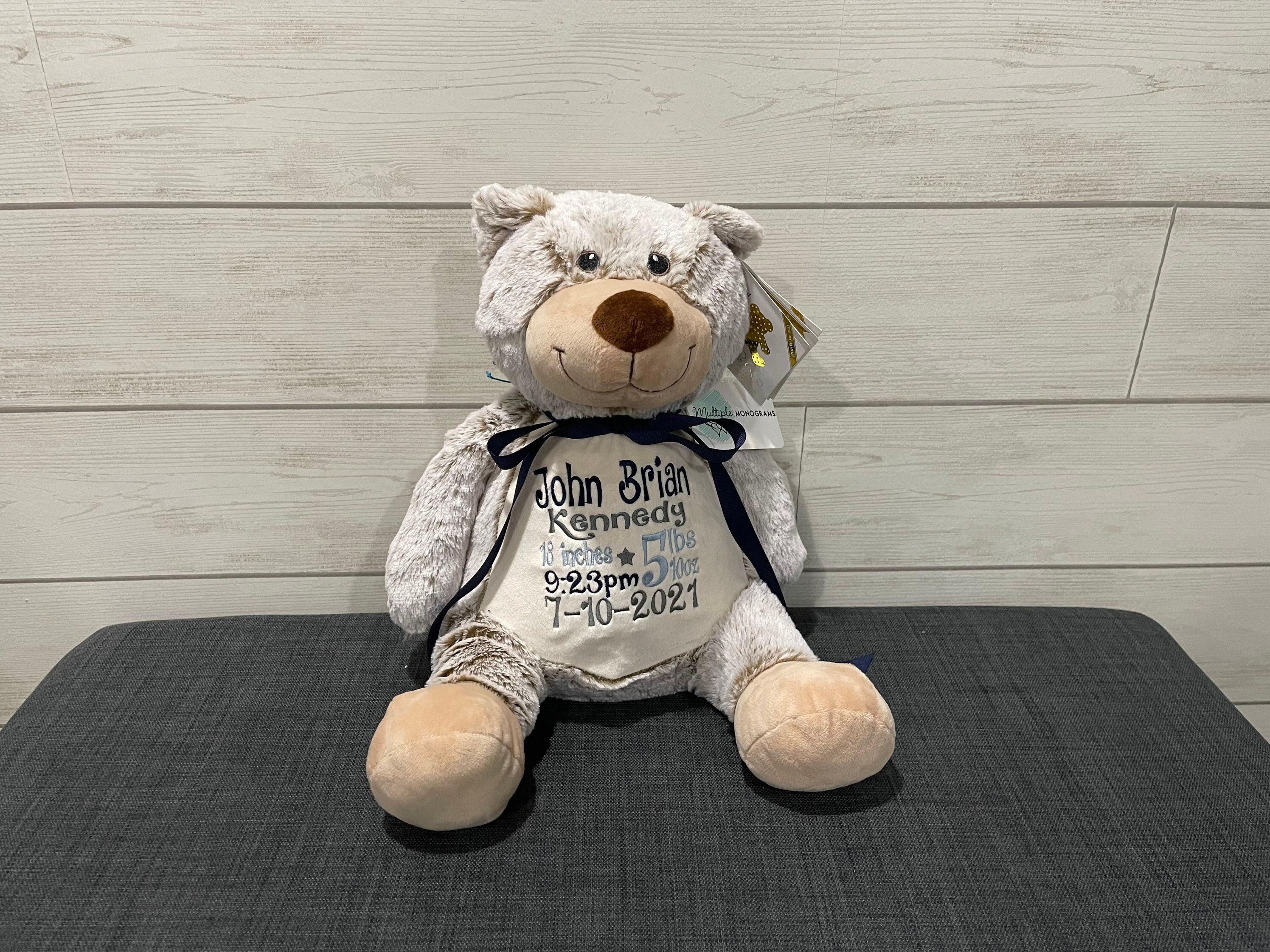
Monogrammed stuffed animals solve this problem by combining familiarity, comfort, and identity. Seeing a name stitched onto a plush toy immediately signals ownership. This isn’t just another toy. It’s theirs. Research from the National Institutes of Health shows that children respond positively to objects associated with their name, reinforcing emotional security.
From my experience, the personalization transforms how the gift is received. Parents notice the thought behind it, and children recognize it as something special. That’s why monogrammed stuffed animals work across ages, from infancy through adulthood.
Monogrammed Stuffed Animals for Babies and Toddlers
For babies, safety and softness come first. Reputable brands in the U.S. follow ASTM F963 toy safety standards, ensuring materials are non-toxic and features are securely stitched. When combined with personalization, these plush toys become both safe and meaningful.
I’ve gifted monogrammed stuffed animals alongside items like a little giraffe lovey blanket and the pairing works beautifully. The stuffed animal becomes the emotional anchor, while the little giraffe lovey blanket adds sensory comfort. Parents appreciate gifts that support routines like sleep and travel. According to the Centers for Disease Control and Prevention, consistent sleep routines are important for infant development, and comfort items help reinforce those routines.
Emotional Development and Early Attachment
Early childhood experts agree that comfort objects support emotional growth. A study published in the Journal of Child Psychology and Psychiatry found that children with consistent comfort items showed better self-regulation during stressful situations. Monogrammed stuffed animals enhance this effect by adding familiarity through personalization.
I’ve seen toddlers seek out their monogrammed stuffed animals during doctor visits or daycare drop-offs. The name stitched on the toy reinforces reassurance. While items like a little giraffe lovey blanket offer tactile comfort, the personalized stuffed animal adds emotional grounding.
School-Age Children and Identity Building
As children grow, gifts need to evolve with them. School-age kids are developing a stronger sense of identity, and personalization supports that process. Monogrammed stuffed animals may no longer be carried everywhere, but they still hold value as bedtime companions or room decor.
In the U.S., parents increasingly look for gifts that balance fun with emotional support. According to Pew Research Center data, families prioritize products that help children express individuality. A monogrammed stuffed animal with a child’s name reinforces that sense of self. I’ve noticed kids proudly show these items to friends, especially when their name is part of the design.
Teenagers and Sentimental Value
It might surprise some people, but teenagers still appreciate stuffed animals, especially when they carry emotional meaning. The difference is how they’re used. For teens, monogrammed stuffed animals often serve as keepsakes rather than playthings.
I’ve given monogrammed stuffed animals to teens heading to college, and the feedback has been overwhelmingly positive. According to a survey by the American Psychological Association, familiar objects can help reduce anxiety during major life transitions. A personalized stuffed animal can quietly provide comfort in dorm rooms or new environments, similar to how a little giraffe lovey blanket might comfort a younger child.
Adults and Memory-Driven Gifting
Adults value meaning over novelty. Monogrammed stuffed animals are often given to adults to mark milestones such as anniversaries, recoveries, or memorials. In the U.S., personalized gifts are increasingly popular for these moments. Statista reports steady growth in the personalized gift market, driven by demand for emotional connection.
From my own experience, adults tend to keep monogrammed stuffed animals long-term. They’re displayed on shelves or stored carefully. While practical gifts wear out, these items hold stories. That’s what makes them different.
Real-World U.S. Business Examples
Small businesses across the U.S. have built loyal followings by focusing on monogrammed stuffed animals. A family-owned embroidery shop in Ohio shared that personalized plush toys account for more than half of their annual revenue. Customers often return to buy matching items for siblings, sometimes pairing a stuffed animal with a little giraffe lovey blanket for newborns.
This repeat behavior aligns with consumer data from Nielsen, which shows that emotionally driven purchases lead to higher brand loyalty. Monogrammed stuffed animals fit squarely into that category.
Choosing the Right Monogrammed Stuffed Animal
Choosing the right option depends on age, use, and quality. I always recommend checking fabric type, stitching durability, and embroidery method. Embroidered names last longer than printed ones, especially with frequent washing.
Parents also value practicality. Machine-washable designs are essential, particularly for younger children. When combined with complementary items like a little giraffe lovey blanket, the gift becomes both functional and sentimental.
Cost, Value, and Longevity
In the U.S. market, monogrammed stuffed animals range widely in price. While cheaper options exist, they often compromise on materials or embroidery quality. According to the Bureau of Labor Statistics, families are spending more intentionally on fewer, higher-quality items.
When I calculate value, I look at how long the item will be used or kept. Monogrammed stuffed animals often last years, sometimes decades. That long lifespan makes them a better investment than trendy toys that lose appeal quickly.
My Personal Perspective After Years of Gifting
After years of buying gifts for all ages, I’ve learned that the most successful ones share one trait. They feel personal. Monogrammed stuffed animals consistently deliver that feeling. I’ve seen them comfort babies, reassure kids, and evoke nostalgia in adults.
Pairing them thoughtfully, sometimes with a little giraffe lovey blanket for younger recipients, creates a complete gift experience. These aren’t just purchases. They’re emotional investments.
Why Monogrammed Stuffed Animals Fit Modern Values
Modern consumers value intention, sustainability, and emotional impact. Pew Research Center data shows that buyers increasingly prefer gifts with meaning over mass-produced items. Monogrammed stuffed animals fit this shift perfectly.
They’re not disposable. They’re kept, repaired, and cherished. That aligns with how many families want to shop today.
Conclusion
Monogrammed stuffed animals solve a problem many gift buyers face. They replace forgettable gifts with meaningful ones. Backed by research, real U.S. business trends, and personal experience, they work for every age group.
Whether given alone or paired with a little giraffe lovey blanket, monogrammed stuffed animals offer comfort, identity, and lasting value. For me, they remain one of the most reliable ways to give a gift that truly matters.