Launching a new fashion collection involves risk. You invest significant capital into design, material sourcing, and production before you sell a single item. If the market does not respond well, you face the problem of dead stock and lost revenue. This is a common scenario for many fashion labels, from startups to established houses. The solution lies in testing your market before committing to large-scale production.
Testing allows you to validate your ideas, check the fit and quality of your garments, and gauge customer interest. While many brands look to Asia for mass production, testing often requires a different approach. Partnering with a Garment Manufacturer in Europe offers unique advantages for this crucial phase. European manufacturers often provide lower minimum order quantities (MOQs), faster shipping times to Western markets, and high standards of craftsmanship.
This guide outlines how you can effectively test your new collections. We will look at why Europe is a strategic choice, the specific benefits of running small test batches, and the step-by-step process of working with a manufacturer. We will also touch on how you can Buy Fabric online to streamline this process and specific production techniques like Woven Fabric Garmenting.
Why Choose a Manufacturer in Europe?
When you decide to test a collection, you prioritize speed, quality, and flexibility over the lowest possible unit cost. A Garment Manufacturer in Europe aligns perfectly with these priorities.
High Standards of Craftsmanship
European manufacturing hubs, such as Portugal, Italy, and Turkey, hold a reputation for exceptional quality. The workforce in these regions often possesses deep technical knowledge passed down through generations. When you test a new product, the first impression matters. You need the sample or small batch to look impeccable. A European partner ensures that your Woven Fabric Garmenting meets the highest standards, giving your customers a premium experience right from the start.
Ethical and Sustainable Practices
Sustainability is a major concern for modern consumers. Manufacturing in Europe ensures your products meet strict EU regulations regarding labor rights and environmental protection. This transparency is a powerful selling point. When you market your test collection, you can confidently state that it was made ethically. This adds value to your brand and appeals to conscious shoppers.
Proximity and Speed
Speed to market is essential when testing. If you spot a trend, you want to capitalize on it immediately. Shipping from a Garment Manufacturer in Europe to markets in the UK, USA, or within the EU is significantly faster than shipping from Asia. This allows you to receive samples, make corrections, and get the final product to your warehouse in a fraction of the time.
Innovation and Technology
European manufacturers often lead the way in adopting new technologies. From 3D sampling to advanced automated cutting, these factories use tech to reduce waste and improve precision. This technical capability supports complex designs and ensures that even small production runs are handled with professional care.
The Strategic Benefits of Testing Collections
Testing is not just about avoiding failure; it is about maximizing success. Here is why you should incorporate a testing phase into your business model.
Minimize Financial Risk
The biggest benefit is financial protection. By producing a small batch, you limit your investment. If a specific style does not sell, your losses are minimal compared to a full production run. You save money on materials, manufacturing, and storage.
Gather Real Customer Feedback
Nothing beats real-world data. When you release a test capsule, you get immediate feedback from your actual customers. They will tell you if the fit is right, if the fabric feels good, and if the price point works. You can use this information to tweak the design before scaling up.
Optimize Production Processes
The testing phase acts as a trial run for your supply chain. You can evaluate the performance of your Garment Manufacturer in Europe. Do they communicate well? Do they meet deadlines? Is the quality consistent? It is better to identify supply chain issues during a small run than during a major launch.
Identify Bestsellers
Sometimes, the item you think will sell best is ignored, while the underdog becomes a hit. Testing reveals your true bestsellers. You can then confidently order larger quantities of the winning styles, knowing the demand exists.
How to Test Your Collection: A Step-by-Step Guide
Testing requires a systematic approach. Follow these steps to work effectively with your manufacturing partner.
Step 1: Source the Right Materials
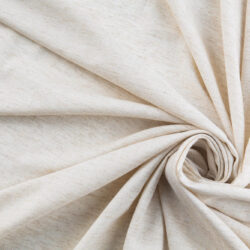
Your design begins with the fabric. For a test collection, you need flexibility. You cannot commit to thousands of meters of fabric. This is where the ability to Buy Fabric online becomes invaluable.
Platforms like Fabriclore allow you to browse thousands of textiles, from sustainable cottons to intricate jacquards, without leaving your studio. You can order swatches to feel the texture and weight. Once you select your material, you can order smaller quantities suitable for sampling and small batches. Sourcing online gives you access to a global library of fabrics, ensuring you find the exact match for your vision.
Step 2: Select a Suitable Partner
Not every factory handles small orders. You need to find a Garment Manufacturer in Europe that specializes in low MOQs and sampling. Look for manufacturers in countries like Portugal or Turkey, which are known for their textile infrastructure.
When vetting potential partners, ask specific questions:
- What is your minimum order quantity per style?
- Do you have experience with Woven Fabric Garmenting?
- What are your lead times for samples versus production?
- Can you work with fabrics I supply myself?
Step 3: Define Testing Parameters
Be clear about what you are testing. Are you testing the fit of a new trouser silhouette? Are you testing the market’s reaction to a bold new print? Define your goals.
Keep the collection small. Focus on 3 to 5 key styles. This keeps costs down and makes the data easier to analyze. Ensure your tech packs are detailed. Clear communication prevents errors and ensures the factory understands your requirements.
Step 4: Focus on Quality Prototypes
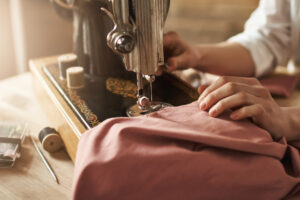
Before you authorize the small batch, you must approve the prototype. This is the “Golden Sample.” Check every stitch, button, and hem. If you are using complex techniques like Woven Fabric Garmenting, inspect the seams and structural integrity closely.
Do not rush this stage. If the sample is flawed, the entire batch will be flawed. Work closely with your Garment Manufacturer in Europe to refine the fit and finish until it is perfect.
Step 5: Execute a Small Production Run
Once the prototype is approved, proceed to a limited production run. A typical test run might be 50 to 100 units per style. This volume is high enough to test the market but low enough to manage risk.
Coordinate the logistics. If you decide to Buy Fabric online from a supplier like Fabriclore, ensure the fabric is delivered to the manufacturer on time. Managing the flow of materials is your responsibility unless the factory offers a full-package service.
Industry Strategies: Testing in Action
Successful fashion brands often use specific strategies when testing in Europe. While every brand is unique, the underlying logic remains consistent.
The “Drop” Model Strategy
Many streetwear and D2C brands use the “drop” model. They design a limited capsule collection and tease it on social media. They produce a small quantity with a trusted Garment Manufacturer in Europe to ensure quick turnaround. When the drop goes live, they aim to sell out immediately.
This strategy relies on scarcity. It creates hype and urgency. By using European manufacturers, they ensure the product quality matches the hype. They often source high-end materials, choosing to Buy Fabric online to find unique prints or technical fabrics that set them apart. If a drop is successful, they may restock it as a permanent collection item.
The Pre-Order Strategy
Another effective method is the pre-order model. You design the collection and produce a set of high-quality samples. You photograph these samples and launch a pre-order campaign. You only start production once you have secured orders.
This method eliminates financial risk almost entirely. However, it requires a very responsive supply chain. A Garment Manufacturer in Europe is ideal here because the shipping times are short. Customers are willing to wait a few weeks, but not months. This model works exceptionally well for complex items requiring expert Woven Fabric Garmenting, such as tailored jackets or coats, where customers appreciate the craftsmanship.
The Feedback-Loop Strategy
Some brands release a “Beta” version of a product. They sell a small batch to their most loyal customers and ask for detailed feedback. They incentivize this with a discount on the next purchase.
For this to work, you need a partner who can make quick adjustments. If customers say the sleeves are too tight, your manufacturer needs to be able to alter the pattern for the next run quickly.
Key Considerations for Woven Garments
Testing woven garments presents specific challenges compared to knits. Woven Fabric Garmenting involves rigid fabrics that do not stretch. Fit is paramount.
When testing woven items like shirts, trousers, or blazers:
- Fabric Choice: The drape and handle of the fabric define the final look. When you buy fabric online, pay attention to the weight (GSM) and composition. Order a sample yard to test how it sews.
- Construction: Woven garments often require more complex construction techniques, such as interfacing, lining, and precise darts. Ensure your manufacturer has specific machinery and skilled operators for wovens.
- Shrinkage: Woven natural fibers like cotton and linen can shrink. Ensure your manufacturer conducts shrinkage tests before cutting the fabric.
Maximizing Your Sourcing Strategy
Efficient sourcing is the backbone of successful manufacturing. You cannot produce a great garment without great fabric.
Digital Sourcing Platforms
The industry is moving online. Sourcing digitally saves time and travel costs. Fabriclore leads this space with a vast digital inventory and specialized support for fashion brands.
When you buy fabric online, you can filter by weave type, sustainability certification, and origin.
One risk of small batch testing is material consistency. If you buy a small amount of fabric for the test, can you get more for the full run? Check the stock continuity with your supplier. Reputable suppliers will indicate if an item is a stock service (always available) or a seasonal one-off.
Navigating Logistics and Compliance

Working with a Garment Manufacturer in Europe simplifies many logistical hurdles, but you must still be diligent.
Customs and Duties
If you are based in the EU, trading with another EU country is seamless—no duties, no customs delays. If you are in the US or UK, you need to understand the import duties. However, the reliability of European shipping often outweighs the cost of duties compared to the unpredictable delays often seen with Asian freight.
Quality Control (QC)
Even with a trusted partner, you should implement a QC process. For a test run, you might ask the factory to send you a “top of production” sample (the first one off the line) for approval before they finish the rest. This is a final check to ensure the Woven Fabric Garmenting is correct.
Building a Long-Term Partnership
Testing is not just a one-off transaction; it is the first date in a long-term relationship. If the test goes well, you will want to scale up with the same partner.
Treat your manufacturer with respect. Pay on time. Communicate clearly.
Conclusion
Testing new collections is a smart business move. It protects your cash flow, validates your designs, and builds a stronger connection with your customers. By choosing to work with a Garment Manufacturer in Europe, you gain access to quality, speed, and ethical production standards that align with modern brand values.
The process begins with smart sourcing. Use digital platforms to Buy Fabric online and secure high-quality materials. Focus on technical excellence, especially in Woven Fabric Garmenting, to ensure your product stands out. Start small, gather data, and use those insights to grow.
Fashion is competitive, but it rewards those who are agile and data-driven. Do not guess what your customers want. Test it, verify it, and then deliver it with confidence.