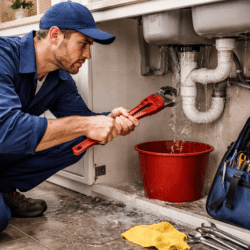
There are no warning texts for home and car repairs. These crises come at the worst time when you are already low in terms of your bank account. The hottest week of winter is the period when the boiler fails. Your roof leaks when it is raining. Such emergency solutions just can not wait.
The short-term loans provide you with immediate cash when you are short of savings. Nevertheless, a wrong decision can cause financial difficulties. This is a guide that assists one in selecting the appropriate loan to use in case you have an emergency that requires repair, and ensures you do not enter into debt traps.
Short-Term Loan Options for Repairs
Emergency repairs can be taken as short-term loans, and you are not able to cover costs using your savings. The following are the quick solutions to small problems that require money.
Personal Loans
The best to use with medium and large repairs are personal loans. There are many online lenders and private money lenders in the UK that offer these with fixed rates, so your payments stay the same each month. You will normally borrow between £1,000 and £50,000. That is also based on your needs and credit score.
The higher your credit, the lower your interest rate. A majority of lenders consider your credit rating, income, and debt levels and approve your proposal. Money is transferred to your account in a matter of days. Some online lending sources provide funding the next day.
The set deadline is good for budgeting, and you will be sure when the loan is due. They last between one and five years, and therefore, it suits bigger repair expenses.
Payday Loans
Payday loans will be a way to get rather quick cash to make some minor and immediate repairs. These loans are not very expensive, between £100 and £1000, and they should be paid back on your next paycheck.
Other payday lenders cash the cheques on the day of application. Many payday lenders deposit money the same day you apply. Most don’t run credit checks, and they focus instead on proof that you have income coming.
The interest rates are extremely high and often reach 400% APR or more. This makes them among the most expensive borrowing options available.
Title Loans
The title loans let you use them as security for borrowing if you own your car outright. The lender holds your car title while you keep driving the vehicle. Your loan amounts vary based on your car’s value.
The lenders approve the loan quickly since your car serves as collateral. Your credit scores matter less with these loans. This makes them accessible if your credit history has problems.
However, you can’t miss your payments, which could lead to losing your car. This creates a difficult situation if you need that same vehicle for work or to take children to school.
Credit Card Cash Advance
Your existing credit card might offer a quick solution through a cash advance. You can withdraw money from an ATM or bank using your credit card, getting funds instantly.
Unlike regular credit card purchases, interest starts accumulating immediately with no grace period. The rates typically exceed your standard purchase APR.
How to Pick the Right Loan?
You can start by accurately estimating the repair cost – get a detailed quote first. You would always compare the APR of the various loans. This single number tells you the true yearly cost, making it easier to compare options fairly.
Let’s say you are looking for a short-term loan for the unemployed with bad credit. In this case, it’s important to check the APR as many lenders charge high rates. It’s better to go to the lenders who charge less.
You look carefully at all fees hiding in the agreement. The origination fees take a slice before you even receive the money. The early repayment charges penalise you for paying off the loan sooner. The late payment fees can quickly stack up if you hit a rough patch financially.
The repayment timeline matters. The short terms mean higher monthly payments but less interest overall. The long plans feel easier month-to-month, but cost significantly more over time. You will have an opportunity to select a timeline that suits your budget and will not excessively strain you.
- Secured loans (backed by collateral) offer lower rates but higher risk
- Online lenders might approve loans faster, but vary widely in reputation quality
- Some lenders specialise in fair-credit or poor-credit borrowers with reasonable rates
- Checking pre-qualification options lets you see likely terms without hurting your credit score
You should beware of payday loan rollovers. These rollovers add fees and interest. Most of the borrowers are unable to pay back the loan, and are given extensions of the loan.
You will always check the mitigation of the lender by checking about the customers and regulatory complaints. The subprime lenders can conceal fees, provide low customer service or make use of aggressive collection techniques.
Smart Tips Before You Borrow
You explore other options that might solve your repair emergency without borrowing. You always start by getting multiple repair quotes. Many contractors offer payment plans, especially for larger jobs.
You can ask directly if they can split the cost over several months without interest. Some prefer this arrangement over losing your business entirely. This will eliminate the need to apply for loans, credit checks, and additional charges.
You have a chance to verify the home or appliance cover in your emergency. Most homeowners lose sight of the fact that they are covered for major repairs. Get your policy information or call your warranty firm prior to out-of-pocket payments.
You can review your existing credit cards for special offers. Some may have 0% interest promotions that apply to existing balances. Others might offer new 0% terms if you request them.
- Regular maintenance can prevent many emergencies from happening in the first place
- Some repair companies offer discounts for first-time customers or during slower seasons
- Emergency aid programs exist in many communities for critical home repairs
- DIY solutions might work for simpler issues with proper research and caution
- Some repairs can be temporarily patched until you save for proper fixing
You don’t hesitate to use whatever savings you have, even if it doesn’t cover the entire cost. You can consider selling unused items for quick cash before borrowing. Many households have electronics, furniture, or collectables gathering dust that could fund repairs.
Family help, when available, often comes without interest and with flexible repayment terms. You just be sure to treat family loans with the same seriousness as formal ones. You write down terms and stick to them to preserve relationships.
Build a Buffer for Next Time
The most appropriate solution to such emergencies in the case of future repair is to keep some cash on hand when an incident occurs. That is why today you can begin to create your safety net, no matter how small it is. Set a small target of emergency savings of £500. This is enough to handle many common urgent repairs without borrowing.
You can make saving automatic by setting up a monthly transfer of £25-£50 from your current account to savings. You’ll hardly notice small amounts, but they add up surprisingly fast.
You look for high-yield savings accounts to make your emergency fund work harder. The interest rates beat standard accounts, helping your money grow faster without any extra effort from you
You can keep your emergency fund in a separate account from your daily spending money. This creates a healthy mental barrier that makes you less likely to dip into it for non-emergencies. Many people find separate banks work best.
- Treat savings as a non-negotiable bill, and it changes your mindset about emergency funds
- Seasonal work or side jobs can speed up your emergency fund growth dramatically
- Review and reduce monthly subscriptions often reveals “found money” for savings
You expand your goal to cover 3-6 months of essential expenses. This safety net protects you from both repair emergencies and income disruptions like job loss or illness.
You may avoid emergencies to save more than an emergency. The frequent upkeep of the home reveals minor issues before they turn into disasters. Seasonally, you may walk around your property and view any problems that may be there, such as loose tiles on the roof, blocked gutters or broken pipes.
Conclusion
The emergency repairs will never leave you out of life, and they do not necessarily have to destroy your budget. A single rescue loan can clear the issues and not leave new problems in six months.
Even with only £5 a week, you could begin to accumulate your crisis fund as soon as this crisis is out of the way. The series of repair emergencies has one important lesson to teach, which is preparation.