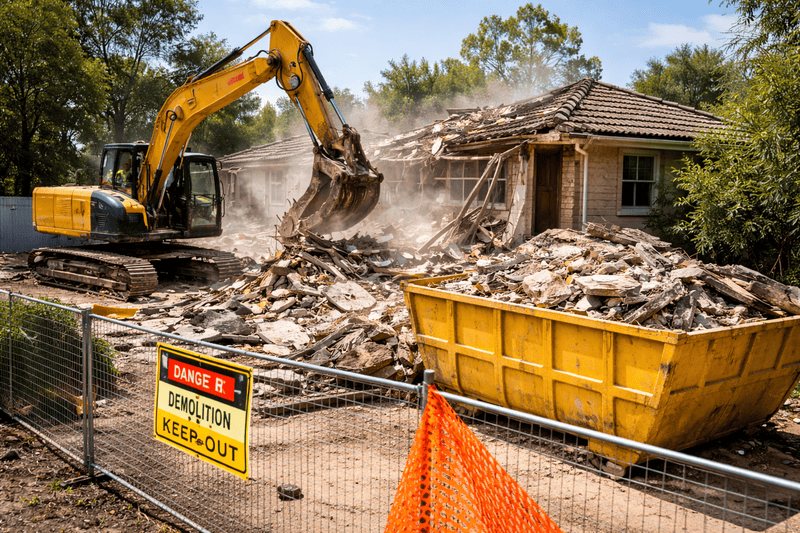
Demolition is often viewed as a brief, disruptive phase that clears the way for something new. In reality, it is a highly controlled process that sets the tone for everything that follows. For property owners, developers and builders working with a Demolition Company Lake Macquarie projects rely on, the success of a build frequently depends on how carefully the demolition stage is planned and executed.
Lake Macquarie presents a unique mix of residential, commercial and industrial sites, many of which sit close to waterways, neighbouring properties or sensitive infrastructure. These conditions mean demolition is rarely a simple matter of machinery and force. Instead, it requires detailed assessment, compliance awareness and methodical execution.
Why demolition is more complex than it appears
Modern demolition involves far more than removing structures. Each project begins with evaluating site conditions, building materials, access constraints and environmental considerations. Older properties may contain hazardous materials such as asbestos, while newer sites still require strict adherence to safety and waste management standards.
In Lake Macquarie, proximity to residential areas often means noise, dust and vibration must be carefully managed. Traffic flow, site access and protection of neighbouring buildings also influence how demolition work is staged.
This is why many professionals refer to resources like Demolition Company Lake Macquarie – Hives Demolition when assessing how experienced contractors approach complex local conditions.
The importance of site assessment before demolition
Every demolition project starts with understanding what is being removed and how it connects to its surroundings. Site assessments identify structural elements, underground services, access points and potential risks. This stage also confirms whether partial or full demolition is required.
In Lake Macquarie, varied terrain and older housing stock mean assessments often uncover challenges such as uneven ground, shared boundaries or legacy services. Identifying these early allows demolition plans to be adjusted before work begins, reducing delays and safety risks.
A thorough assessment also informs waste separation strategies, which are increasingly important for regulatory compliance and sustainability outcomes.
Safety as a primary consideration
Safety is central to demolition work. Structures behave unpredictably once compromised, making planning essential. Controlled sequencing, exclusion zones and protective measures all reduce the risk of injury or property damage.
For a Demolition Company Lake Macquarie clients depend on, safety also extends beyond the site itself. Protecting neighbouring residents, pedestrians and adjacent buildings is part of responsible demolition practice. This often involves temporary fencing, monitoring and communication with nearby stakeholders.
Experienced demolition contractors embed safety into every stage of the process rather than treating it as a compliance checkbox.
Environmental responsibility and waste management
Demolition generates significant volumes of waste, but not all of it belongs in landfill. Timber, concrete, steel and masonry can often be separated and recycled when handled correctly.
Lake Macquarie councils place increasing emphasis on waste diversion and environmental protection, particularly near waterways and bushland. Responsible demolition includes managing runoff, preventing contamination and tracking waste streams.
Discussions around sustainable construction practices frequently appear in industry commentary such as https://aphelonline.com/construction/, where demolition is recognised as a critical starting point for environmentally conscious projects.
Partial demolition and staged works
Not all projects require full site clearance. Partial demolition may involve removing specific structures, extensions or internal components while retaining others. This approach is common in renovations, commercial upgrades or heritage-sensitive sites.
Staged demolition requires precision. Supporting structures must remain stable, and services must be isolated correctly. In Lake Macquarie, where many properties are adapted over time, this type of work is increasingly common.
Engaging Hives Demolition for expert demolition company lake macquarie style experience helps ensure partial demolition does not compromise the integrity of what remains.
Asbestos and hazardous material handling
Asbestos remains a key concern in demolition, particularly in buildings constructed before the late 1980s. Identifying and managing asbestos requires licensed professionals, controlled removal methods and strict disposal procedures.
Lake Macquarie’s mix of older homes and industrial sites means asbestos assessments are a routine part of demolition planning. Failure to manage this properly may result in serious health risks and regulatory penalties.
A Demolition Company Lake Macquarie property owners trust will prioritise hazardous material identification early, ensuring removal is conducted safely and in accordance with regulations.
Preparing sites for the next phase of construction
Effective demolition does not end when structures are removed. Site preparation includes clearing debris, levelling ground and ensuring the site is ready for subsequent trades.
Poor demolition practices may leave hidden issues such as compacted rubble, uneven surfaces or damaged services, which can delay construction and increase costs. Clean, well-prepared sites support smoother transitions into excavation and building stages.
This handover point is where the quality of demolition work becomes most evident.
Managing timelines and coordination
Demolition often sits on the critical path of a project timeline. Delays at this stage can ripple through the entire build schedule. Coordination with builders, engineers and local authorities is essential to keep projects moving.
In Lake Macquarie, approval processes and inspections may influence demolition timelines. Contractors who understand local requirements help streamline approvals and reduce administrative bottlenecks.
This coordination is particularly important for commercial and multi-site developments where multiple trades are involved.
Community impact and communication
Demolition affects more than the immediate site. Noise, dust and visual disruption can impact surrounding communities. Responsible demolition includes clear communication, signage and adherence to approved work hours.
Managing community impact helps maintain goodwill and reduces complaints or work stoppages. For projects in residential areas of Lake Macquarie, this aspect of demolition is often just as important as technical execution.
A professional Demolition Company Lake Macquarie developers engage recognises the importance of transparency and respect for neighbouring properties.
Choosing experience over shortcuts
While demolition may appear straightforward, shortcuts often lead to problems later. Inadequate planning, rushed execution or poor waste management can compromise safety and create costly remediation work.
Experience allows demolition contractors to anticipate challenges rather than react to them. This foresight reduces risk and supports smoother project progression.
Those researching Reliable demolition company lake macquarie services available now often focus on track record and local knowledge rather than headline pricing.
Demolition as the foundation of successful builds
Demolition is not merely a pre-construction task. It is the foundation upon which safe, efficient and compliant builds are established. When carried out responsibly, it clears space, manages risk and prepares sites for long-term success.
In Lake Macquarie’s diverse construction landscape, working with an experienced demolition company helps ensure that what is removed is done so with care, foresight and respect for what comes next.