The construction and facility management landscape in Saudi Arabia is undergoing a significant transformation. As the Kingdom advances toward Vision 2030, smart buildings equipped with advanced Building Management Systems (BMS) have become essential for energy efficiency, operational excellence, and sustainable development. From commercial towers in Riyadh to industrial complexes in Dammam, BMS technology is reshaping how buildings operate across the Kingdom.
This comprehensive guide explores everything you need to know about Building Management Systems, their applications in Saudi Arabia’s unique climate, and how to select the right BMS solutions for your facility.
What is a Building Management System (BMS)?
A Building Management System (BMS), also known as a Building Automation System (BAS), is a computer-based control system installed in buildings to monitor and manage mechanical, electrical, and electromechanical equipment. These systems include heating, ventilation, air conditioning (HVAC), lighting, power systems, fire systems, and security systems.
The primary function of a BMS is to ensure the building operates at peak efficiency while maintaining optimal comfort levels for occupants. The system collects data from sensors and connected devices throughout the building, processes this information, and automatically adjusts settings to maintain desired conditions while minimizing energy consumption.
Core Components of a BMS System
A modern BMS consists of several integrated components working together:
- Sensors and Actuators: Devices that measure environmental conditions (temperature, humidity, CO2 levels) and execute control commands
- Controllers: Processing units that analyze data and make decisions based on programmed logic
- User Interface: Software dashboards that allow facility managers to monitor and control building systems
- Communication Networks: Protocols like BACnet, Modbus, or LonWorks that enable device communication
- Integration Platform: Central system that unifies all building subsystems into one coherent management interface
Building Management vs Building Automation: Understanding the Difference
While the terms “building management” and “building automation” are often used interchangeably, there are subtle distinctions worth understanding.
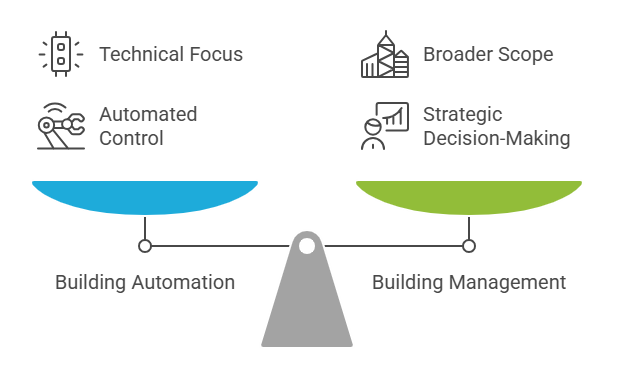
Building Automation refers specifically to the automated control of building systems without human intervention. It focuses on the technical aspects of controlling equipment through pre-programmed logic and schedules. For example, automatically dimming lights based on daylight availability or adjusting HVAC temperatures according to occupancy patterns.
Building Management encompasses a broader scope. It includes automation but also incorporates monitoring, data analysis, reporting, and strategic decision-making. A comprehensive building management approach uses automation as one tool within a larger framework of facility optimization, maintenance planning, and operational strategy.
In practice, modern BMS solutions integrate both concepts, providing automated control while offering the analytical tools and interfaces needed for effective building management.
BMS System Electrical: The Power Behind Smart Buildings
Understanding the electrical components of a BMS system is crucial for proper implementation and maintenance. The BMS system electrical infrastructure forms the backbone of the entire automation network.
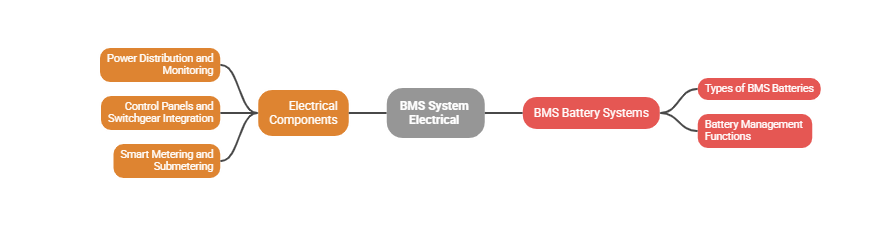
Electrical Components in BMS Systems
Power Distribution and Monitoring
BMS systems continuously monitor electrical consumption across different zones and equipment. This includes:
- Real-time power usage tracking for HVAC systems, lighting circuits, and critical loads
- Voltage and current monitoring to detect anomalies
- Power quality analysis to prevent equipment damage
- Load balancing to optimize electrical distribution
Control Panels and Switchgear Integration
Modern BMS integrates directly with electrical distribution systems, allowing centralized control of:
- Motor control centers for HVAC equipment
- Lighting control panels with dimming and scheduling capabilities
- Emergency power systems and automatic transfer switches
- Variable frequency drives (VFDs) for energy-efficient motor operation
Smart Metering and Submetering
Electrical metering capabilities within a BMS provide granular energy consumption data, essential for:
- Tenant billing in commercial buildings
- Department-level energy accountability
- Identifying energy waste and optimization opportunities
- Compliance with energy efficiency standards
BMS Battery Systems: Ensuring Uninterrupted Operation
The BMS battery system is a critical component that ensures continuous operation during power outages or grid instabilities—a consideration particularly important in Saudi Arabia’s industrial facilities and mission-critical buildings.
Types of BMS Batteries
- Uninterruptible Power Supply (UPS) Integration: BMS monitors and manages UPS systems, ensuring backup power for critical building functions
- Controller Backup Batteries: Local battery backup for individual BMS controllers to maintain control logic during brief power interruptions
- Emergency Lighting Systems: Battery-backed emergency and exit lighting integrated into the BMS for centralized monitoring
Battery Management Functions
A sophisticated BMS battery management system provides:
- Battery health monitoring and predictive maintenance alerts
- Automatic testing schedules to ensure reliability
- Temperature compensation for optimal battery performance in Saudi Arabia’s climate
- Integration with emergency systems for seamless failover
BMS Control System: How Smart Buildings Think and Act
The BMS control system is the intelligent core that processes information and executes decisions. Understanding how these control systems work helps facility managers leverage their full potential.
Control Strategies in Modern BMS
Scheduled Control
Time-based programming that adjusts building systems according to occupancy patterns. In Saudi Arabia, this might include:
- Pre-cooling buildings before peak heat hours
- Ramadan-specific schedules for altered work patterns
- Weekend setback modes for energy conservation
Demand-Based Control
Real-time adjustments based on actual building conditions:
- Occupancy-based HVAC zoning using sensors
- CO2-level-responsive ventilation
- Daylight harvesting for lighting optimization
Optimized Start/Stop
Advanced algorithms that learn building thermal characteristics and calculate the optimal time to start HVAC systems, ensuring comfort when occupants arrive while minimizing runtime.
Integration and Interoperability
Modern BMS control systems integrate with:
- Access control and security systems
- Fire alarm and life safety systems
- Elevator and escalator management
- Renewable energy systems (solar panels increasingly common in Saudi installations)
Benefits of BMS in Saudi Arabia’s Climate
Saudi Arabia’s extreme climate conditions make Building Management Systems not just beneficial but essential for sustainable building operation. The Kingdom experiences some of the world’s highest temperatures, with summer readings regularly exceeding 45°C in cities like Dammam and Riyadh.
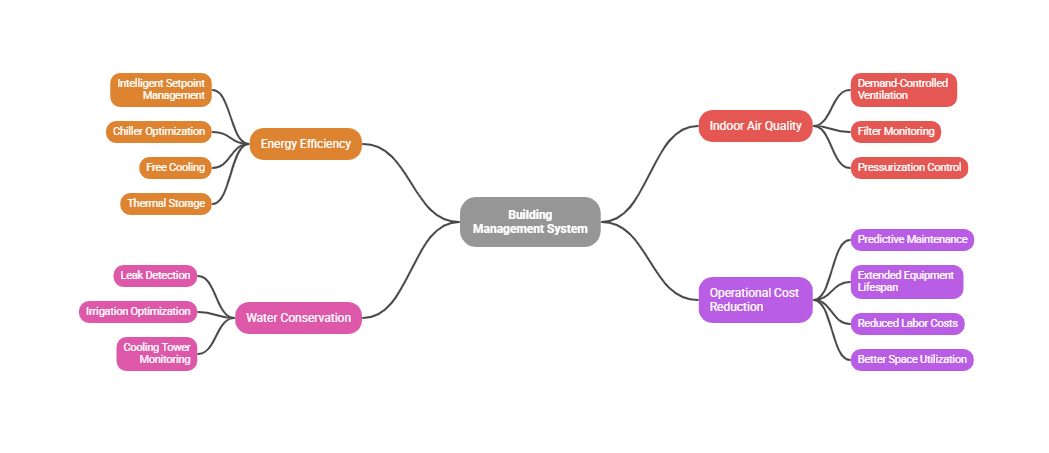
In Saudi Arabia’s extreme heat, HVAC systems consume up to 70% of building energy. A well-configured BMS can cut this by 25–40% through smart temperature control, chiller optimization, night cooling, and off-peak load shifting. BMS also helps maintain indoor air quality by managing ventilation, monitoring filters, and reducing dust infiltration. Additionally, it supports water conservation through leak detection and cooling tower monitoring, while lowering operational costs via predictive maintenance, automation, and improved space utilization.
BMS Applications Across Building Types in Saudi Arabia
Commercial Buildings and Office Towers
The growing commercial real estate sector in Riyadh and Jeddah increasingly demands sophisticated BMS solutions. Applications include:
- Multi-tenant energy management and billing
- Conference room automation with integrated AV systems
- Parking management with ventilation control based on CO levels
- Integration with building access systems for after-hours energy savings
Industrial Facilities and Warehouses
Manufacturing and logistics facilities in Dammam and Jubail benefit from BMS through:
- Process environment control for temperature-sensitive operations
- Compressed air system optimization
- Integration with industrial automation systems
- Energy monitoring for ISO 50001 compliance
Healthcare Facilities
Hospitals and medical centers require specialized BMS capabilities:
- Critical zone pressurization control for infection prevention
- Redundant systems monitoring for life-safety equipment
- Medical gas system integration and monitoring
- Compliance with stringent healthcare facility standards
Educational Institutions
Universities and schools across Saudi Arabia implement BMS for:
- Classroom-specific scheduling aligned with academic calendars
- Laboratory exhaust and fume hood control
- Campus-wide energy monitoring and sustainability reporting
- Integration with security systems for comprehensive facility management
Hospitality and Residential Developments
Hotels and residential towers utilize BMS for:
- Guest room automation with occupancy-based energy management
- Central plant optimization for properties with multiple buildings
- Amenity area control (pools, gyms, common spaces)
- Integration with property management systems
Top 10 Building Management System Companies in Saudi Arabia
The Saudi Arabian market offers numerous BMS providers, each with specific strengths and specializations. Understanding the landscape helps in making informed decisions.
Leading International BMS Providers
- Schneider Electric
With a strong presence across the Kingdom, Schneider Electric offers the EcoStruxure Building platform, providing end-to-end BMS solutions from sensors to cloud-based analytics. Their local support infrastructure and project experience in mega-projects make them a dominant player.
- Siemens Building Technologies
Siemens delivers comprehensive building automation through their Desigo platform, with particular strength in integrated fire safety and security systems. Their extensive Saudi Arabia portfolio includes landmark projects in Riyadh and the Eastern Province.
- Johnson Controls
Known for their Metasys BMS platform, Johnson Controls brings deep HVAC integration expertise and has been active in the Saudi market for decades, with manufacturing facilities supporting local projects.
- Honeywell Building Solutions
Honeywell’s Enterprise Buildings Integrator (EBI) serves large commercial and industrial facilities, with strong cybersecurity features increasingly important in Saudi Arabia’s critical infrastructure.
- Trane Technologies (Tracer)
Specializing in HVAC-centric BMS solutions, Trane’s Tracer system excels in chiller plant optimization—particularly relevant for Saudi Arabia’s cooling-dominated building loads.
- Delta Controls
A Canadian manufacturer with growing Saudi presence, Delta Controls offers flexible, open-protocol solutions particularly suited to complex integrations and retrofit applications.
- Aala-teh
A professional BMS solutions provider serving the Saudi market, Aala-teh specializes in tailored building automation solutions for commercial and industrial facilities in Dammam, Riyadh, and across the Kingdom. Their local expertise and responsive support make them a valued partner for organizations seeking reliable BMS implementation and service.
- Automated Logic (Carrier)
Part of the Carrier family, Automated Logic provides the WebCTRL building automation system with strong emphasis on energy management and intuitive user interfaces.
- Distech Controls
Offering the Envysion platform, Distech Controls focuses on IP-based open systems, appealing to organizations prioritizing flexibility and future-proofing.
- KMC Controls
Known for cost-effective solutions without sacrificing functionality, KMC serves the mid-market segment with reliable BMS platforms suitable for smaller commercial buildings and educational facilities.
Selection Considerations
When evaluating BMS companies in Saudi Arabia, consider:
- Local support infrastructure: Availability of trained technicians and spare parts in-Kingdom
- Project experience: Track record with similar building types and scales
- Open protocols: Systems using BACnet or Modbus for future flexibility
- Cybersecurity: Increasingly critical for connected building systems
- Scalability: Ability to expand as building needs evolve
How to Choose the Right BMS Supplier in Saudi Arabia
Choosing the right BMS supplier is essential for long-term building performance. Start by defining your facility’s needs, including system integrations, performance goals, and retrofit constraints. Evaluate technical capabilities such as open protocols, scalability, cybersecurity, and user-friendly analytics. Assess supplier experience in Saudi Arabia, local support availability, and long-term reliability. Finally, consider total cost of ownership, not just upfront cost, and request detailed proposals to compare scope, timelines, support, and value.
Future Trends: Evolution of BMS in Saudi Arabia
Building Management Systems in Saudi Arabia are rapidly evolving with AI, cloud computing, and smart energy integration. AI-driven BMS platforms will predict failures, optimize performance automatically, and adapt to changing building usage. Cloud-based systems enable remote management, centralized dashboards, and advanced analytics. As renewable energy adoption grows, BMS will support smart grids, solar optimization, demand response, and battery storage. Future BMS solutions will also enhance occupant well-being through personalized controls, smart lighting, improved air quality, and wellness-focused building standards
Conclusion: Making the Smart Choice for Your Saudi Facility
Building Management Systems are a vital long-term investment for facilities across Saudi Arabia. Harsh climate conditions, rising energy demands, and sustainability goals make advanced building automation a necessity rather than a luxury. Achieving success depends on choosing the right BMS supplier, designing systems suited to local conditions, and ensuring proper implementation and continuous optimization. As Saudi Arabia advances toward Vision 2030, solutions from experienced providers, including Aala-teh, will be central to developing smart, efficient, and future-ready buildings.